
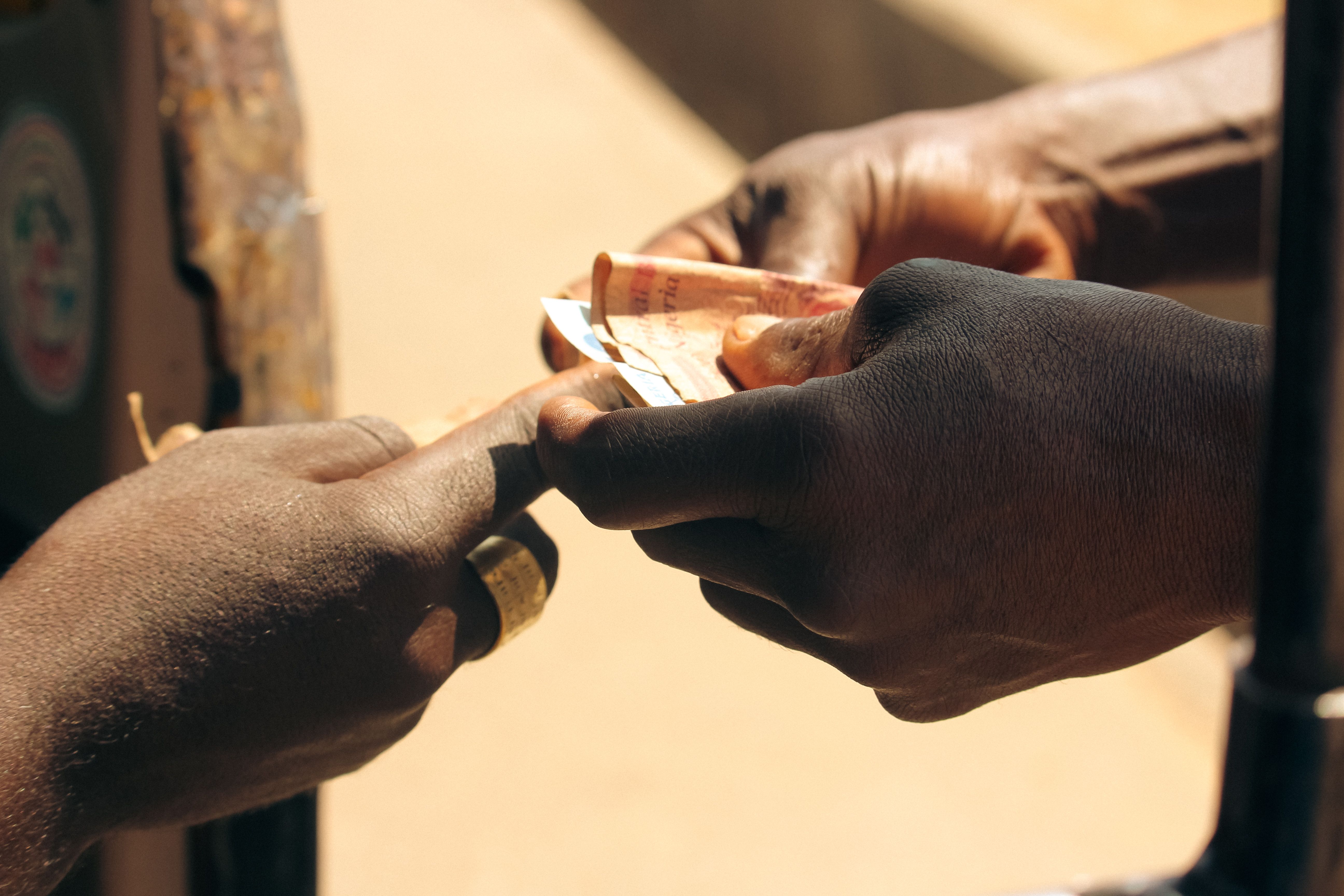
This is a study written in love — love for God's Word, love for the Church, and love for every sincere believer who has ever sat in a pew wondering whether they were truly honouring God with their giving, or simply funding someone's personal empire.
The question of whether Christians are required to tithe is one of the most frequently raised and least honestly answered questions in the modern church. It is also one of the most consequential — because how we answer it either sets people free to give generously from transformed hearts, or binds them under a law they were never meant to carry, administered by men who observe only the parts of that law that serve them financially.
God's Word is not afraid of close examination. The Bereans in Acts 17:11 were commended as noble precisely because "they received the word with all readiness, and searched the Scriptures daily to find out whether these things were so." That same noble spirit drives this study. So let us open the Word — from the very beginning — and let it speak for itself.
Part One
The Promised Land: The Foundation of the Tithe
To understand the tithe faithfully, we must understand where it came from. The tithe did not appear in Scripture as a timeless universal principle dropped from heaven without context. It emerged from a very specific historical moment — the moment God brought a nation out of slavery in Egypt and gave them a land of their own.
When God redeemed Israel from Egypt, He made them a covenant promise: the land of Canaan, a land flowing with milk and honey, would be their inheritance (Exodus 3:8; Deuteronomy 6:3). This was not merely a geographical gift. It was a theological statement. The land was God's — He owned it — and He was granting it to His people as tenants under His covenant:
"The land shall not be sold permanently, for the land is Mine; for you are strangers and sojourners with Me."
Leviticus 25:23Because the land belonged ultimately to God, He had the right to require a portion of it. The tithe was His claim on the fruit of His land, expressed through His covenant with the nation of Israel. This is why the tithe is described in terms of agricultural produce and livestock — not money — because the produce of the land was the very thing God had given them. To tithe was to acknowledge that everything came from Him.
This foundation is critical. The tithe was an expression of Israel's covenant relationship with God, lived out in a specific land, under a specific law. It was not a universal command issued to all human beings across all ages. Understanding this saves us from a great deal of confusion.
Part Two
How the Land Was Divided Among the Tribes
Before we examine the tithe itself, we need to understand how the land was distributed — because the distribution of the land is the very reason the tithe existed.
Twelve Sons, Thirteen Territories
Jacob (whom God renamed Israel) had twelve sons, and from these sons came the twelve tribes of Israel. However, when it came to dividing the Promised Land, the count became slightly more complex. Jacob had blessed Joseph's two sons — Ephraim and Manasseh — with the status of full tribal heads (Genesis 48:5). This meant that instead of one tribe called "Joseph," there were now two: the tribe of Ephraim and the tribe of Manasseh. This gave Israel, in effect, thirteen tribal units.
Now, one tribe received no land at all: Levi. The Levites were set apart entirely for service to God, and their inheritance was God Himself. Remove Levi, and you have twelve tribes to receive territorial portions — but these twelve portions came from thirteen original sons, because Joseph had been replaced by his two sons. The result was a neat providential balance: Levi stepped out of the land inheritance, and Joseph's two sons stepped in to fill the twelve portions.
The Inheritance East of the Jordan River
Here is where many readers encounter confusion when reading Joshua 13. Before the people of Israel ever crossed the Jordan River into Canaan proper, two and a half tribes had already asked Moses for their inheritance on the east side of the Jordan. These were the tribes of Reuben, Gad, and the half-tribe of Manasseh. They had seen the land east of the Jordan and recognised it as excellent territory for their large herds of livestock (Numbers 32:1-5).
Moses agreed on the condition that their fighting men would still cross the Jordan and assist the other tribes in conquering Canaan. They agreed, and their settlement was formalised before Joshua led the nation across the river (Numbers 32:20-33).
"And Moses gave to the children of Gad, to the children of Reuben, and to half the tribe of Manasseh the son of Joseph, the kingdom of Sihon king of the Amorites and the kingdom of Og king of Bashan, the land with its cities within the borders."
Numbers 32:33Understanding Joshua 13: The Nine and a Half Tribes West of Jordan
When Joshua 13 opens, the Lord speaks to Joshua about the land remaining to be divided. The 2.5 tribes east of Jordan have already received their inheritance. Now Joshua must organise the distribution of Canaan — the land west of the Jordan — among the remaining nine and a half tribes. When Joshua 13:7 mentions "nine tribes and the half-tribe of Manasseh," it is referring specifically to those tribes who had not yet received land west of the Jordan — not to the total count of all Israel's tribes.
"Now therefore, divide this land as an inheritance to the nine tribes and to the half-tribe of Manasseh... But to the tribe of Levi Moses had given no inheritance; the LORD God of Israel was their inheritance, as He had said to them."
Joshua 13:7, 33East of the Jordan (settled under Moses, before the conquest): Reuben, Gad, and the half-tribe of Manasseh — 2.5 tribes.
West of the Jordan (distributed by Joshua after the conquest): Judah, Simeon, Benjamin, Dan, Ephraim, Issachar, Zebulun, Asher, Naphtali, and the other half of Manasseh — 9.5 tribes.
No land inheritance: Levi — scattered in 48 designated cities throughout all the other tribes' territories, with pastureland for their animals (Numbers 35:1-8), but no tribal agricultural land of their own.
Total: 12 territorial portions + Levi (no land). Joseph counted through Ephraim and Manasseh.
Every tribe was rooted in the soil of a specific inheritance — except Levi. And it is precisely this exception that explains everything about the tithe.
Part Three
The Levites: Those Whose Inheritance Was God
What God said to Aaron — the high priest, the head of the Levitical line — is one of the most striking statements in the entire Old Testament. It is tender, it is intimate, and it carries profound theological weight:
"You shall have no inheritance in their land, nor shall you have any portion among them; I am your portion and your inheritance among the children of Israel."
Numbers 18:20God Himself was the Levites' inheritance. They surrendered the security, wealth, and generational legacy that came from owning land, and in exchange, God said: I will take care of you through the gifts of My people. This was not a punishment. It was a calling — a beautiful, costly, honoured calling.
The Levites spent their lives in the service of the Tabernacle and later the Temple. They were singers, gatekeepers, teachers of the Law, assistants to the priests, and guardians of the sacred furniture. They served in rotating shifts. They had no time for farming. They had no land to farm. Their entire provision came from the tithes and offerings of the other twelve tribes — given to them as their "inheritance in return for the work which they perform, the work of the tabernacle of meeting" (Numbers 18:21).
"The tithe was not given to make priests wealthy. It was given to make landless servants of God sustainable. The moment we lose sight of this, the entire framework of the tithe becomes distorted."
The tithe was compensation for sacrifice — a divine welfare arrangement for those who had given up material security in order to serve the nation spiritually. It was never designed to enrich a religious leader. It was designed to feed a servant of the Temple who could not feed himself because he held no land.
Part Four
The Three Distinct Tithes of Israel
One of the most important — and most consistently overlooked — facts in the tithing conversation is this: the Bible does not describe one tithe. It describes at least three, each with a separate purpose, a separate recipient, and a separate set of instructions. To speak of "the tithe" as if it were a single, simple command is to collapse an entire system into one convenient fraction.
The Levitical Tithe — The Annual Tenth for the Servants of God
"Behold, I have given the children of Levi all the tithes in Israel as an inheritance in return for the work which they perform, the work of the tabernacle of meeting... For the tithes of the children of Israel, which they offer up as a heave offering to the LORD, I have given to the Levites as an inheritance."
Numbers 18:21, 24This was the foundational tithe of the Old Covenant system. Every Israelite farmer and herdsman was to set aside ten percent of the produce of their land — grain, new wine, olive oil, and livestock — and give it to the Levites as their income in exchange for their full-time service at the Tabernacle. This was their wages, their sustenance, their provision for a life of dedicated service. Notice the form: grain, wine, oil, animals — not coins, not shekels, not money in any form.
↓ The Tithe of the Tithe — Numbers 18:26-28What is rarely mentioned — and is absolutely vital — is that the Levites themselves were not exempt from giving. When the Levites received the tithe from the people, God required them to give a tenth of everything they received to the priests (the sons of Aaron) who served at the altar. This is called the tithe of the tithe.
"Speak thus to the Levites, and say to them: 'When you take from the children of Israel the tithes which I have given you from them as your inheritance, then you shall offer up a heave offering of it to the LORD, a tenth of the tithe... you shall give the LORD's heave offering from it to Aaron the priest.'"
Numbers 18:26, 28There was no accumulation of private wealth at any level of the system. The tithe flowed from the people to the Levites, and a tenth of that flowed from the Levites to the priests. The entire arrangement was structured for sustenance, not accumulation. Accountability was built into the very design.
Do those who receive tithes today give a tenth of what they receive to their overseers? Or does the money reach them and stop — accumulating without accountability, flowing without any upward tithe of their own?
The Festival Tithe — The Annual Tenth for Celebration Before God
"You shall truly tithe all the increase of your grain that the field produces year by year. And you shall eat before the LORD your God, in the place where He chooses to make His name abide, the tithe of your grain and your new wine and your oil, of the firstborn of your herds and your flocks, that you may learn to fear the LORD your God always."
Deuteronomy 14:22-23This second tithe is entirely separate from the Levitical tithe, and understanding it changes the entire conversation about tithing. This tithe was not given to the Levites as their income. It was set apart by each Israelite family and brought to a specific place of worship to be eaten there by the family itself — in celebration, in joy, in reverence before God.
Where God Chooses to Place His Name
Notice the phrase: "the place where He chooses to make His name abide." This is a recurring phrase in Deuteronomy (12:5, 11, 14; 14:23-25; 16:2, 6, 11) that carries great significance. Under the Old Covenant, God did not establish a single permanent centre of worship from the very beginning. Rather, He Himself chose the location — and this location changed over time as Israel's situation changed. During the wilderness years, worship was at the Tabernacle at the centre of the camp. As the tribes settled Canaan, the Tabernacle was set up at Shiloh (Joshua 18:1), where it remained for many years. Much later, God chose Jerusalem, and it was there that the Temple was eventually built.
This means the worshipper had to travel to God's appointed meeting place — carrying his produce — to eat his festival tithe there in the presence of the Lord. The place was not chosen by the priest. It was chosen by God. And it rotated as the nation's circumstances changed. The tithe was not simply a personal transaction between an individual and any teacher he chose. It was brought to the divinely appointed place of corporate worship.
Money Was in Existence — But Not Commanded as the Tithe
This point deserves special attention, because it removes any excuse for the modern teaching: money was not unknown in ancient Israel. It was widely in use — yet God deliberately chose not to command it as the form of the tithe. Abraham paid four hundred shekels of silver for burial land (Genesis 23:15-16). Joseph was sold for twenty shekels of silver (Genesis 37:28). Mosaic Law itself prescribed payments in silver shekels for various legal obligations, and the sanctuary shekel was a standardised monetary weight (Leviticus 27:25; Exodus 30:13). Money existed. God simply chose the produce of the land as the form of the tithe, because the tithe was a covenant acknowledgement of His ownership of the land and its increase — not a generic tax on all wealth.
The one occasion where money enters the festival tithe narrative is highly instructive:
"But if the journey is too long for you, so that you are not able to carry the tithe, or if the place where the LORD your God chooses to put His name is too far from you... then you shall exchange it for money, take the money in your hand, and go to the place which the LORD your God chooses. And you shall spend that money for whatever your heart desires: for oxen or sheep, for wine or similar drink, for whatever your heart desires; you shall eat there before the LORD your God, and you shall rejoice, you and your household."
Deuteronomy 14:24-26Money here was simply a logistical convenience for transportation. A farmer too far from the appointed place of worship could sell his produce for silver, carry the lighter coins, then purchase food and drink at the destination to be consumed in the feast. The money was never given to the priest. It was spent by the worshipper on food for his own family's celebration. The tithe returned to its original form — food and drink — the moment it arrived at the appointed place.
A Feast Shared with the Levites
The festival tithe was not purely private. Deuteronomy 14:27 adds a communal dimension: "You shall not forsake the Levite who is within your gates, for he has no part nor inheritance with you." The local Levite was to be invited and included in the family feast. The festival tithe created community — a shared table of worship between the farming family and the landless servant of God.
Has any minister who demands your tithe ever told you that one of the biblical tithes was yours to spend on your own family's celebration feast before God — with the Levite invited to share it? Or has every instruction about the tithe been directed toward putting money into the offering bag?
The Poor Tithe — The Third-Year Tithe for the Vulnerable
"At the end of every third year you shall bring out the tithe of your produce of that year and store it up within your gates. And the Levite, because he has no portion nor inheritance with you, and the stranger and the fatherless and the widow who are within your gates, may come and eat and be satisfied, that the LORD your God may bless you in all the work of your hand which you do."
Deuteronomy 14:28-29Every third year, the tithe was not taken to Jerusalem or any central place of worship. Instead, it was stored locally — "within your gates" — in the community itself, accessible to the four most vulnerable groups in Israelite society: the Levites (still landless), the resident foreigner, the fatherless, and the widow. This was a national welfare system, encoded in the Law of God, functioning at the community level.
Deuteronomy 26:12-15 adds that when completing this tithe, the Israelite was to stand before God and formally declare that he had kept the law faithfully — that none of it had been eaten in mourning, set apart for the dead, or kept back from the needy. This was an accountability oath — a covenant declaration made directly before heaven.
Does the church that demands your tithe maintain a publicly accessible community storehouse — a food reserve for widows, orphans, strangers, and the needy in the local area? Is there a transparent, community-serving fund that anyone in poverty can access? If not, the institution to which God attached His blessing simply does not exist in that ministry.
When we account for all three tithes across a three-year cycle — the annual Levitical tithe (10%), the annual Festival tithe (10%), and the third-year Poor tithe — the average annual giving rate for an Israelite farmer was approximately 23% of his agricultural produce, not 10%. And each tithe had a specific purpose that went far beyond enriching any individual religious leader. One sustained servants of God. One nourished the giver's own family in worship. One fed the community's most vulnerable.
Part Five
The Rules Governing the Tithe — Are They Being Observed?
Every law has its rules. Every covenant obligation has its terms. The tithing system God gave to Israel was not a vague instruction — it was a precisely defined legal code, with specific forms, recipients, procedures, exclusions, and calendar requirements. If anyone invokes the authority of this law and says to a congregation "God commands you to tithe," they take upon themselves the responsibility of teaching and observing that law fully and faithfully. Let us examine the rules one by one.
The Law of Moses is specific and consistent: the tithe was drawn from the seed of the land, the fruit of the tree, and the animals of the herd and flock (Leviticus 27:30-32). It was grain, wine, oil, and livestock — the tangible produce of the land God had given Israel.
"And all the tithe of the land, whether of the seed of the land or of the fruit of the tree, is the LORD's. It is holy to the LORD... And concerning the tithe of the herd or the flock, of whatever passes under the rod, every tenth one shall be holy to the LORD."
Leviticus 27:30, 32As we have established, money was not absent from Israel. It was widely in use. Abraham weighed 400 shekels of silver for burial land (Genesis 23:15-16). Joseph was sold for 20 shekels of silver (Genesis 37:28). Coins and weights were commonplace. Yet God, who had every opportunity to say "bring a tenth of your income," chose not to. He specified the fruit of the land, because the tithe was a covenant acknowledgement of His ownership of that land — not a generic income tax. Money, wages, trade profit, and salaries were never placed under the tithe command in the entire Mosaic Law.
Those who demand your tithe today demand money — the very form of wealth the Law of Moses never subjected to the tithe. If they invoke the authority of God's command, are they not also bound by the form God specified? Why is the obligation applied, but not the object of that obligation?
The tithe command was issued to the nation of Israel, living in the Promised Land, under the terms of the Mosaic Covenant. It was a covenant obligation tied to a particular people, a particular land, and a particular period in redemptive history. And that covenant has not merely been superseded — it has been formally abolished by the death and resurrection of Jesus Christ.
"Having abolished in His flesh the enmity, that is, the law of commandments contained in ordinances, so as to create in Himself one new man from the two, thus making peace."
Ephesians 2:15"Having wiped out the handwriting of requirements that was against us, which was contrary to us. And He has taken it out of the way, having nailed it to the cross."
Colossians 2:14"In that He says, 'A new covenant,' He has made the first obsolete. Now what is becoming obsolete and growing old is ready to vanish away."
Hebrews 8:13The Mosaic Covenant — the entire law of Moses, including its tithing regulations — has been nailed to the cross. It has been made obsolete. Christians are not under the Law of Moses (Romans 6:14; Galatians 3:24-25; 5:18). We live under the New Covenant, established in the blood of Jesus Christ. To bind Christians to the Mosaic tithing law is to ask them to return to a covenant that Christ has already fulfilled and set aside.
Those who invoke the tithe command are invoking an Old Covenant obligation. Do they also teach their congregations to observe Sabbath regulations, dietary laws, and the Levitical cleanliness codes of the same covenant? Or is the tithe uniquely selected while the rest of the Mosaic Law is set aside?
The Levites who received the tithe were legally prohibited from owning tribal land. They lived in designated Levitical cities, but held no agricultural territory (Numbers 35:1-8). They had no fields, no vineyards, no orchards, and therefore no independent source of the agricultural wealth that the rest of Israel could generate. The tithe was justified because of their landlessness. It was compensation for what they had surrendered, not a reward for religious status. Furthermore, the Levites who received the tithe were required to tithe a tenth of it to the priests above them. The system was designed for sustenance, not affluence.
Does the minister who receives your tithe today have no personal wealth, no property, no business, no inheritance, and no independent income? Does he tithe a portion of what he receives to his overseers? If his circumstances bear no resemblance to a Levite's, on what basis does he invoke a Levite's income?
The Festival Tithe (Deuteronomy 14:22-27) was not surrendered to a priest or a religious institution. The Israelite was commanded to set it apart, bring it to the place where the LORD your God chooses to put His name — God's appointed meeting place in that era, whether Shiloh or later Jerusalem — and eat it there, together with his family, in joyful celebration before the Lord. He was explicitly told to "spend it on whatever your heart desires" — food, drink, celebration. The money was never handed to the priest; it was spent by the worshipper himself on food and drink for his family's feast of worship, with the local Levite welcomed to share the table.
Has the minister who teaches the tithe ever told you that you are biblically commanded to spend a portion of your tithe on your own family's celebration feast before God? Or has every teaching about the tithe been directed toward giving more to a human institution?
The Poor Tithe of Deuteronomy 14:28-29 was not brought to Jerusalem and not given to the priest's personal household. It was stored within the local community gates, accessible to widows, orphans, resident foreigners, and landless Levites in need. It was a publicly held food reserve — a community welfare fund in agricultural form. And it is to this tithe — the community poor tithe — that the specific blessing of Deuteronomy 14:29 was attached: "that the LORD your God may bless you in all the work of your hand." This was God's blessing on those who cared for their community's most vulnerable — not a prosperity promise for giving money to a preacher.
Where is the community storehouse maintained by the church that demands your tithe? Is there a transparent, publicly accessible fund from which widows, orphans, strangers, and the poor can draw provision? If not, the institution to which God attached His blessing simply does not exist there.
The tithe applied to "the increase of the land" — what the ground produced and what the herds multiplied. Mosaic Law never extended the tithe to include the income of tradespeople, merchants, craftsmen, soldiers, or wage earners. A carpenter in ancient Israel was not obligated to tithe his earnings. A merchant was not obligated to tithe his profits. Only farmers and herdsmen, drawing increase from God's land, were under the tithe command. The vast majority of people in modern economies — who earn salaries, wages, professional fees, and business income — would not have been subject to the agricultural tithe even if they had lived in ancient Israel.
If the tithe command is being applied today, why is it applied to salary earners, professionals, and business owners — categories of people who were never under the tithe obligation even in Israel? Is this faithful application of God's Law, or is it an expansion beyond what God ever commanded?
The tithe was tied to the agricultural cycle — the annual harvest. Deuteronomy 14:22 is explicit: "You shall truly tithe all the increase of your grain that the field produces year by year." The three-year cycle of tithes was an annual rhythm: the Levitical tithe each year, the Festival tithe each year, and the Poor tithe every third year. The calendar of tithing was governed by seasons of harvest — not by monthly pay cycles or weekly worship gatherings. There is no biblical basis for the practice of weekly or monthly tithing.
The tithe was commanded "year by year." Where does the weekly offering bowl and the monthly bank transfer find their justification in the tithing law? If the authority of the Mosaic tithe is being invoked, why is its calendar completely abandoned?
God commanded that every seventh year was to be a Sabbath rest for the land — a year in which fields were not ploughed or harvested in the usual commercial sense (Leviticus 25:1-7). Since the tithe was drawn from the land's agricultural produce, and since that produce was not commercially gathered in the seventh year, the tithe effectively ceased every seventh year. God built rest and release into the very rhythm of Israel's giving. He is not a taskmaster demanding perpetual output without pause.
Has any church that teaches the tithe ever declared a Sabbath year — a full year with no collection — in honour of God's design? Or does the offering never stop, the financial pressure never relent, in every week of every year without exception?
Leviticus 27:32-33 specifies a precise method for selecting the animal tithe: the shepherd was to count his livestock as they passed under his rod, and every tenth animal — regardless of its quality — was designated holy to the Lord. He was not permitted to examine the herd and choose which animal fell to the tenth position. He could not swap a poor animal for a good one or keep the best for himself. The selection was systematic, impartial, and beyond personal manipulation. This regulation prevented both the dishonesty of giving God the worst and the showiness of giving God the best as public display.
Modern tithe collection involves none of these protections. There is emotional pressure, prosperity promises tied to greater giving, and spiritual shame directed at those who give less. Does any of this resemble the careful, impartial, non-manipulative spirit of Leviticus 27?
Part Six
The Malachi Passage: Read in Its True Context
No passage of Scripture has been used more frequently to demand financial giving than Malachi 3:8-10. It appears at offering time in churches all over the world — and almost always stripped of the context that fundamentally changes how it should be understood.
"Will a man rob God? Yet you have robbed Me! But you say, 'In what way have we robbed You?' In tithes and offerings. You are cursed with a curse, for you have robbed Me, even this whole nation. Bring all the tithes into the storehouse, that there may be food in My house, and try Me now in this, says the LORD of hosts, if I will not open for you the windows of heaven and pour out for you such blessing that there will not be room enough to receive it."
Malachi 3:8-10Who Was God Addressing?
The book of Malachi was addressed to post-exilic Israel — Jews who had returned from Babylonian captivity and were living in the land of Canaan, under the terms of the Mosaic Covenant. God was addressing an Israelite nation that had neglected its covenant obligations. The people had stopped bringing their agricultural tithes — the grain, oil, wine, and livestock that sustained the Levites and the Temple. As a result, the Levites had abandoned the Temple to go work in fields so they could eat (Nehemiah 13:10-11). God was calling His covenant people back to their covenant responsibilities. He was not issuing a universal command to 21st-century Christians.
What Was the Storehouse?
The storehouse in Malachi 3:10 — "that there may be food in My house" — was a literal warehouse within the Temple complex for storing grain, oil, and wine — physical food, not currency. Nehemiah 13:12 describes it precisely: "Then all Judah brought the tithe of the grain and the new wine and the oil to the storehouse." Grain. Wine. Oil. Physical food stored in a physical building for a specific community welfare purpose. When a modern preacher reads "bring all the tithes into the storehouse" and then displays a bank account number, he has redirected a command about community food storage into a personal financial appeal. The form, the recipient, and the purpose are all different.
God Also Rebuked the Priests in the Same Book
There is something deeply important that is almost always omitted when Malachi 3 is preached. The book of Malachi does not begin with a rebuke of the people. It begins with a devastating rebuke of the priests. Before God accuses the people of robbing Him, He addresses the religious leadership:
"A son honours his father, and a servant his master. If then I am the Father, where is My honour? And if I am a Master, where is My reverence? says the LORD of hosts to you, O priests, who despise My name."
Malachi 1:6"And now, O priests, this commandment is for you. If you will not hear, and if you will not take it to heart, to give glory to My name, says the LORD of hosts, I will send a curse upon you, and I will curse your blessings."
Malachi 2:1-2The same God who said "bring all the tithes" also promised to curse the blessings of corrupt priests. The accusation in Malachi ran in both directions — toward a people who withheld tithes, and toward a priesthood that had corrupted worship, offered defiled sacrifices, and failed to teach the Law faithfully (Malachi 1:7-8; 2:8-9). The preacher who reads Malachi 3 to his congregation should also read Malachi 1 and 2 to himself.
The Blessing Was a Covenantal Promise — Not a Universal Transaction
The promise of "windows of heaven" was a specific covenantal blessing offered to Old Covenant Israel within the framework of Deuteronomy 28. That same covenant chapter that promised blessing for obedience (verses 1-14) also promised devastating national curses for disobedience — drought, plague, famine, military defeat, and exile (verses 15-68). No one who quotes the blessing of Malachi 3 as a universal promise applies the full weight of the Deuteronomic covenant along with it. The blessing is extracted; the covenant is abandoned. That is not faithful teaching.
When Malachi 3 is preached to a congregation, are Malachi 1 and 2 also preached to the preacher? Does he examine whether he, as a recipient of the people's offerings, is living up to God's standard for those who receive from His people? Or does the blessing always flow to him and the rebuke always flow downward?
Part Seven
What the New Testament Actually Teaches About Giving
It must be said with equal clarity: the New Testament does not teach that Christians have no obligations of generosity. On the contrary — the New Covenant calls believers to a generosity that is far more radical than the tithe, because it flows not from legal obligation but from hearts transformed by grace.
"So let each one give as he purposes in his heart, not grudgingly or of necessity; for God loves a cheerful giver."
2 Corinthians 9:7Paul's instruction could not be clearer. Not grudgingly or of necessity. These words dismantle the entire methodology of the tithe-demanding preacher. When giving is extracted through fear of a curse, when it is demanded under the threat of divine judgment, when it is produced by spiritual coercion — that is not the New Covenant pattern. God loves the giver whose heart has freely decided.
The early church in Jerusalem gave far beyond any tithe — freely, voluntarily, sacrificially:
"Now all who believed were together, and had all things in common, and sold their possessions and goods, and divided them among all, as anyone had need."
Acts 2:44-45Nobody calculated ten percent. Nobody threatened a curse. The Spirit moved people to give because they had encountered a God who had given everything for them. And Paul's vision for ongoing giving was built on the principle of equality — a community in which no one is crushed under burden so that another lives in ease:
"For I do not mean that others should be eased and you burdened; but by an equality, that now at this time your abundance may supply their lack, that their abundance also may supply your lack — that there may be equality."
2 Corinthians 8:13-14The vision of a poor congregation funding a wealthy pastor's personal empire is not a New Testament concept. It is the precise opposite of what Paul taught.
Did Jesus Affirm the Tithe for the Church?
Jesus referenced the tithe in only two places in the Gospels — Matthew 23:23 and Luke 11:42 — and in both cases He was addressing Pharisees who were under the Law of Moses, during His pre-cross ministry. These statements were made before the New Covenant was established in His blood (Hebrews 9:15-17; Luke 22:20). The writer of Hebrews makes explicit what happens to the tithing law when Jesus becomes our High Priest:
"For the priesthood being changed, of necessity there is also a change of the law."
Hebrews 7:12With the Levitical priesthood abolished and replaced by Christ's eternal priesthood after the order of Melchizedek, the law that sustained that priesthood — including the tithe — was necessarily changed. Christ, our eternal High Priest, does not need our grain. He has been raised incorruptible. What He asks for is our hearts, our lives, and our love expressed in service to one another.
Part Eight
Speaking the Truth in Love: What We Must Acknowledge
We have walked through the full landscape of what the Bible actually says about the tithe. Now we must speak plainly — not in hostility, not in self-righteousness, but in the spirit of Ephesians 4:15, which calls us to "speak the truth in love." A doctor who withholds a diagnosis to avoid discomfort has not shown love. Love speaks what is true, even when it is uncomfortable, because truth is what sets people free.
The teaching of the tithe as practised in many churches today does not faithfully represent what the Bible teaches. The tithe was agricultural, not monetary — yet money is demanded. It was tied to the Promised Land and the Mosaic Covenant — yet it is applied to wage earners everywhere. It sustained landless Levites — yet it flows to men of significant personal wealth. It included a portion that the giver ate himself — yet none of this is taught. It required a community storehouse for the poor — yet no such storehouse exists. It was yearly — yet it is collected weekly. It rested every seventh year — yet no Sabbath year is observed. These are not minor differences. They represent a comprehensive departure from what the Law actually said.
The Scripture Has Already Warned Us About This
We say the next things not in anger, but because God Himself — through His apostles — warned the Church that this would come. Recognising it is not cynicism; it is exactly the discernment the apostles urged upon us.
"But there were also false prophets among the people, even as there will be false teachers among you, who will secretly bring in destructive heresies... And many will follow their destructive ways, because of whom the way of truth will be blasphemed. By covetousness they will exploit you with deceptive words."
2 Peter 2:1-3Covetousness. Exploit. Deceptive words. Peter is not describing people who outright deny the faith. He is describing people who use selected, real Scripture — quoted beautifully, preached compellingly, attributed to God — to achieve financial outcomes that the full text would never support. The deception is not in what they say. It is in what they never say.
"Now I urge you, brethren, note those who cause divisions and offenses, contrary to the doctrine which you learned, and avoid them. For those who are such do not serve our Lord Jesus Christ, but their own belly, and by smooth words and flattering speech deceive the hearts of the simple."
Romans 16:17-18Smooth words. Flattering speech. Serving their own belly. Paul is describing a recognisable pattern: beautiful, warm, spiritually compelling language — scripture quoted, blessings promised, God's name invoked — deployed in the service of personal financial appetite. The simplicity of those who love God and want to obey Him is turned against them.
"...men of corrupt minds and destitute of the truth, who suppose that godliness is a means of gain. From such withdraw yourself."
1 Timothy 6:5"For there are many insubordinate, both idle talkers and deceivers... who subvert whole households, teaching things which they ought not, for the sake of dishonest gain."
Titus 1:10-11And Jude, writing against those who exploit the fellowship of believers for personal enrichment, invokes the sobering example of Balaam — a prophet who knew the true God, could speak His words, but was willing to prostitute his spiritual gift for financial reward:
"Woe to them! For they have gone in the way of Cain, have run greedily in the error of Balaam for profit, and perished in the rebellion of Korah."
Jude 1:11The error of Balaam is not ignorance. It is the deliberate use of prophetic gifts in the service of greed. This is why Paul found it necessary to distinguish his own ministry from those who were "peddling the word of God" (2 Corinthians 2:17) — the very fact that he had to draw this distinction tells us this was already a present danger in the first-century Church, and it has never ceased.
A Word to Those Who Have Given Sincerely
We want to be very gentle here, because many people reading this have given faithfully, generously, and with whole hearts — often at real personal cost. If that is you, please hear this: your sincerity is precious to God. The heart that desires to give to God is a beautiful heart. What you intended when you gave — to honour God, to support His work, to walk in obedience — God sees and honours.
But sincerity alone does not protect us from giving in the wrong way, to the wrong ends, under the wrong teaching. God calls us to worship Him in both spirit and truth (John 4:23-24). The form of our worship matters. What we believe about our giving matters.
Do not give out of fear. Do not give because a curse was threatened. Seek the truth about giving — open your Bible, read the giving passages in their full context, and ask God to show you what faithful New Covenant generosity truly looks like. You will find that it is freer, richer, and far more joyful than giving under threat ever was. Real worship is offered in spirit and in truth. Seek that. Pursue it. And let no person take from you by fear what God designed to be given in freedom.
Conclusion
The Beauty of New Covenant Giving
Let us close not with a list of what not to do, but with a vision of what God has actually called us into — because the New Covenant picture of giving is not a diminished version of the tithe. It is a gloriously expanded, grace-saturated way of living that fulfils everything the tithe was meant to accomplish, and does so not from compulsion but from love.
Think about what the three Old Testament tithes were designed to achieve:
- The Levitical Tithe sustained those who gave themselves to the work of God's service. The New Covenant community achieves this through voluntary, generous support of those who genuinely labour in the Word — not to enrich them, but to free them to serve (1 Timothy 5:17-18; Galatians 6:6).
- The Festival Tithe created occasions of communal joy, worship, and feasting before God, binding families and Levites together in celebration. The New Covenant fulfils this every time the church gathers to worship, to break bread together in fellowship, and especially in the Lord's Supper itself — the ultimate covenant meal of remembrance and celebration (1 Corinthians 11:23-26).
- The Poor Tithe provided for widows, orphans, strangers, and the vulnerable within the community. The New Covenant calls every believer to care for these same people — not once every three years, but as a living, daily expression of true religion: "Pure and undefiled religion before God and the Father is this: to visit orphans and widows in their trouble" (James 1:27). When the New Testament church shares all things and cares for its poor, it does so not from legal obligation but from hearts poured out in love (1 John 3:17; Acts 4:34-35).
Everything the tithe system was designed to accomplish — sustaining servants of God, creating joyful communities of worship, and caring for the vulnerable — the New Covenant community of selfless, grace-motivated giving fulfils completely, and more beautifully. Not by formula. Not by fear. Not by a tenth of agricultural produce delivered to an appointed storehouse. But by whole lives offered to God, expressed daily in love for one another. This is the true worship that is acceptable to God — the worship that flows from a life laid down, a heart renewed, and a Spirit empowered community of grace.
"I beseech you therefore, brethren, by the mercies of God, that you present your bodies a living sacrifice, holy, acceptable to God, which is your reasonable service. And do not be conformed to this world, but be transformed by the renewing of your mind, that you may prove what is that good and acceptable and perfect will of God."
Romans 12:1-2This — a life surrendered, a mind renewed, a will aligned with God's — is the New Covenant's answer to the tithe. It is not less. It is immeasurably more. And it is offered not to make a preacher wealthy, but to make the giver holy and the community whole.
Know the Word. Search the Scriptures daily. Give freely, give joyfully, give sacrificially — but give as you have purposed in your heart, not as someone else has demanded under threat. And let no person take from you by fear what God designed to be given in freedom.
"You shall know the truth, and the truth shall make you free." — John 8:32